Pind Daan in Gaya: a journey of remembrance, rooted in family.
Some journeys are made for those who came before us. Understand the ritual, the sacred places and the practical details of planning your family's Pind Daan in Gaya Ji.
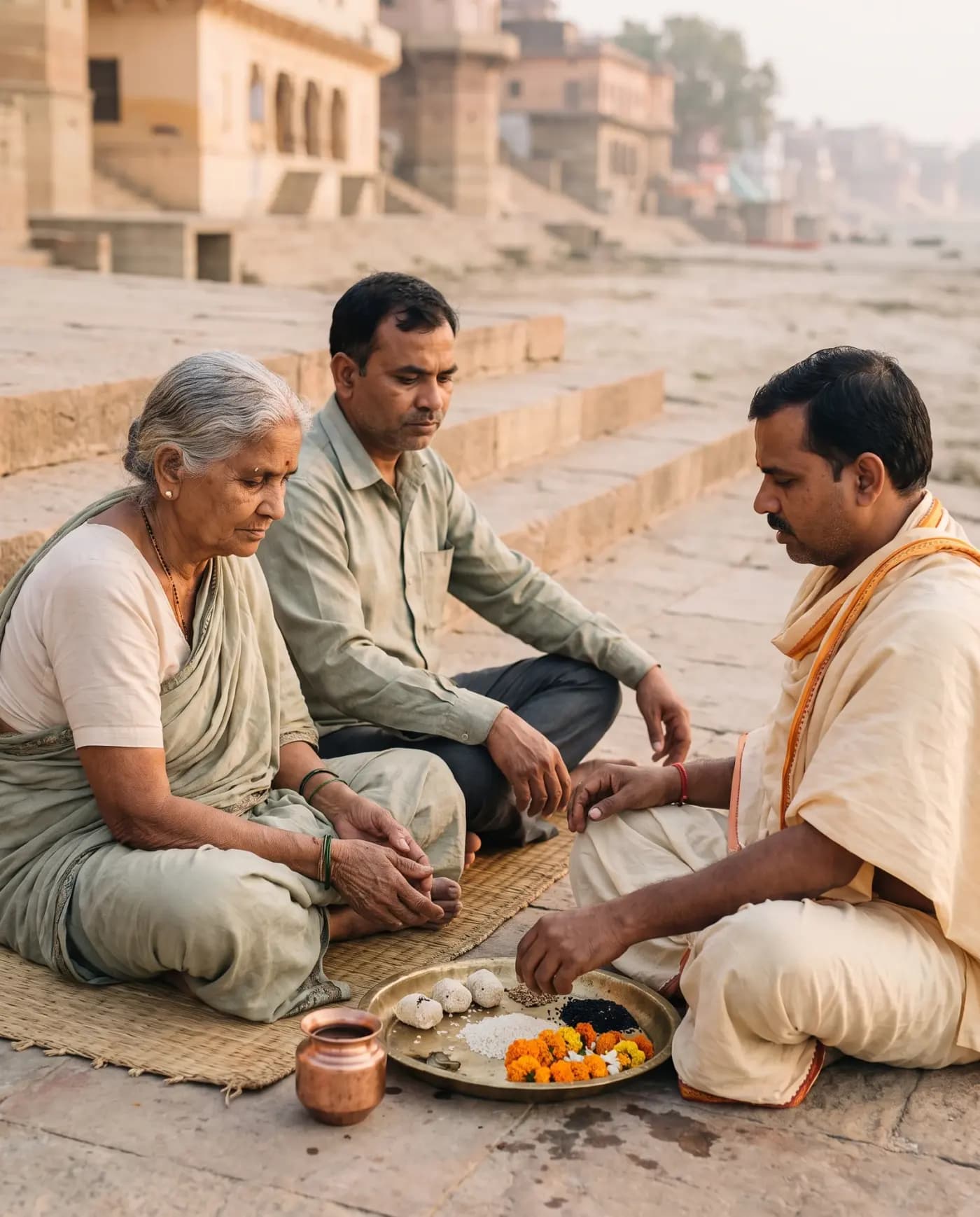
Why families come to Gaya
For generations, families have travelled to Gaya to offer prayers for departed relatives. In Hindu tradition, Pind Daan is associated with peace for ancestors and the fulfilment of family obligations through offerings, remembrance and gratitude.
Vishnupad Temple, dedicated to Lord Vishnu, and the Falgu River are central to the city's ritual landscape. Traditions connect Gaya with Lord Rama's offerings for his father, Dasharatha. Your family's priest can explain how these traditions relate to your own observance.
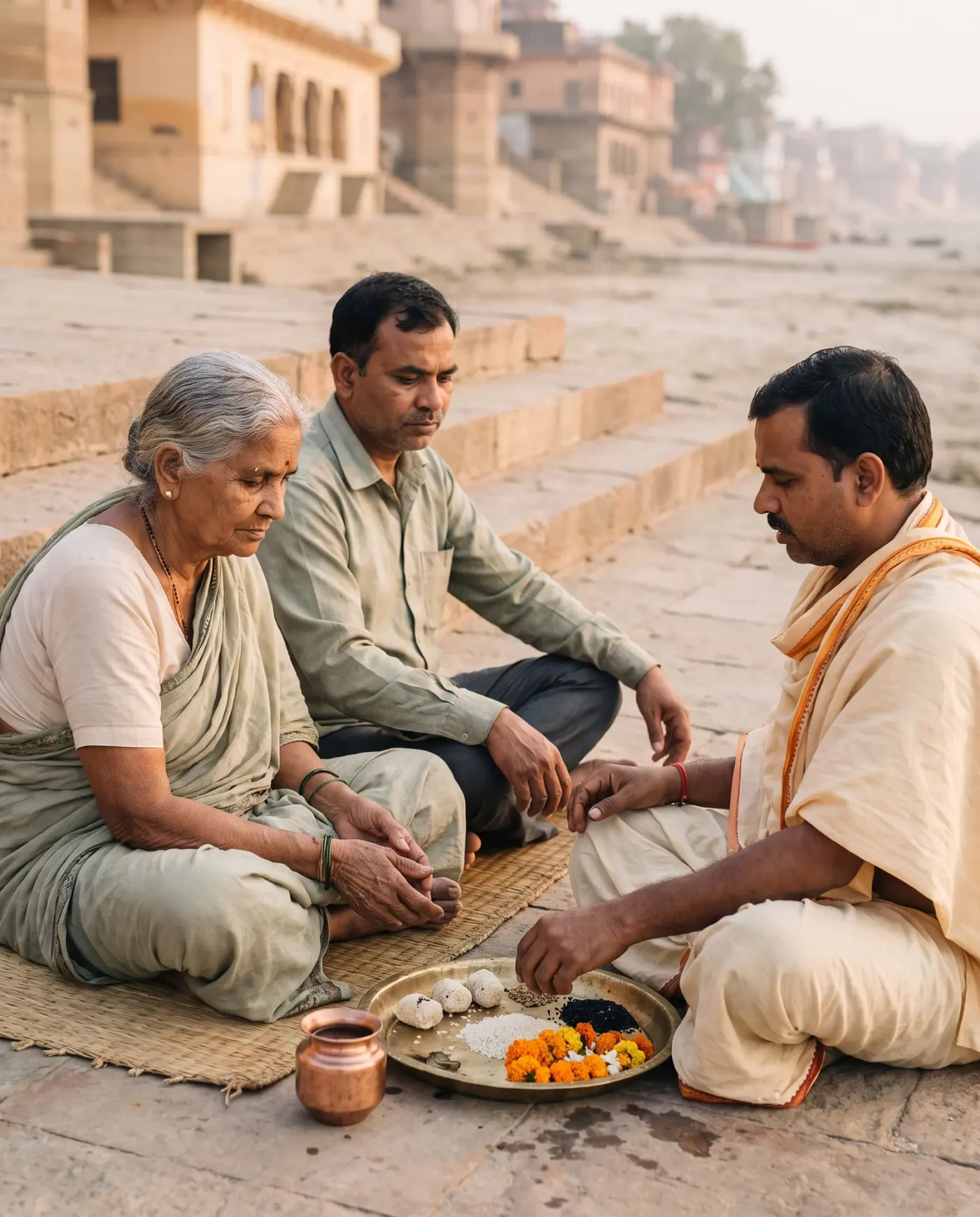
The sacred places of Gaya
Gaya's ritual landscape includes many vedis, or places of offering. The sites included in a visit vary by tradition, purpose and available time. Agree on your route before travelling.
Vishnupad Temple
Falgu River
Akshaya Vat
Other places to discuss with your Pandit
- Ramshila: a hill associated in tradition with Lord Rama's ancestral offerings.
- Pretshila and Brahma Kund: sacred places connected with rites for the departed; hill access involves walking and steps.
- Mangala Gauri: an important temple in Gaya's sacred landscape. Ask whether a visit belongs in your itinerary.
Pind Daan procedure: what to expect
The exact sequence is guided by your family tradition and Pandit. These steps explain the broad flow of a visit; they are not a fixed itinerary for every family.
- 1
Discuss your family and intention
Share the ancestor names, relationships, gotra if known, and any relevant tithi or family custom. Confirm the planned sites and meeting point.
- 2
Prepare and make the sankalpa
Your Pandit guides the preparation and declaration of intent. Ask in advance about clothing, food observances and any purification practices.
- 3
Offer Tarpan and pindas
Follow the priest's instructions for water offerings, rice pindas and mantras at the agreed ritual locations. You do not need to memorise the Sanskrit recitations.
- 4
Continue to the agreed vedis
Visit the remaining sites on your route with time for prayer and rest. The number of locations and order are decided with your Pandit.
- 5
Complete the family observance
Conclude with the prayers, daan, dakshina or bhojan agreed for your ritual. Ask about any practices to follow after returning home.
How much time should you allow?
Decide the ritual scope before booking your return journey. Travel time between sites, crowds and the needs of older family members all affect the pace.
Ask about a one-day plan
Plan an extended stay
The right scope matters more than the label
Terms such as "basic", "complete" or "premium" can mean different things to different providers. Ask for the exact ritual, locations and inclusions in writing.
When to plan your Gaya visit in 2026
Pitru Paksha is a major period for ancestral observances. Families also arrange visits at other times, guided by their tithi, tradition and travel needs.
| When | Why families choose it | Planning note |
|---|---|---|
| Pitru Paksha 26 Sep–10 Oct 2026 | A major annual period for Shraddha, Tarpan and Pind Daan. | Expect busy ghats and arrange accommodation and guidance early. |
| Sarva Pitru Amavasya 10 Oct 2026 | Often considered when an ancestor's exact tithi is unknown. | Confirm suitability and local timings with your Pandit. |
| A family tithi or Amavasya | An observance chosen according to family practice. | Check the local panchang before finalising travel. |
| Outside the peak season | More flexibility for families coordinating travel and support. | Ask about suitable dates, weather and ritual arrangements. |
Pind Daan cost in Gaya: know what is included
There is no single price for every family's visit. The ritual scope, number of days, materials, bhojan, travel and accommodation affect the total. Ask for a personalised, itemised quote before confirming.
| Arrangement | Suited to | Ask your Pandit to confirm |
|---|---|---|
| Focused ritual visit | A family with a limited route and short stay. | Rites, sites, priest's fees, samagri and dakshina. |
| Extended ritual itinerary | A family planning several days and additional vedis. | The daily route, number of priests, bhojan and local transport. |
| Visit with travel support | A family needing help with arrival, stay and transfers. | Hotel category, meals, pickup points and separate travel charges. |
| Remote participation enquiry | A family unable to travel to Gaya. | Tradition-specific suitability, who performs the rites, and any video arrangements. |
Before you pay: Confirm the total, inclusions, optional offerings, cancellation terms and any additional charges. A longer itinerary or higher price does not itself establish religious suitability.
A little preparation for a thoughtful visit
Keep your family details ready
- Ancestor names and their relationship to you.
- Gotra and relevant tithis, if known.
- Any instructions from your family priest.
- Your preferred language and who will participate.
Plan for everyone's comfort
- Discuss steps, walking distances and transport needs.
- Confirm the meeting point before arrival.
- Ask which materials are supplied and what to bring.
- Leave time for rest, especially with older relatives.
Frequently asked questions
Honour your roots. Plan your family's Gaya journey.
Find guidance on the ritual, the route and the details that matter to your family. Begin with a conversation with a Gaya Pandit.